Delhi: On Tuesday, the Supreme Court considered the need for an independent, transparent, and comprehensive inquiry into allegations of police brutality during recent student protests regarding the NEET paper leak. The Court also ordered the release of students detained or arrested during the protests, provided they have no prior criminal record.
A bench led by the Chief Justice of India (CJI) observed that “agitations or protests are natural in a democracy” and stated that once a uniform protocol governing protests and police action is in place, “whoever has committed excesses, taken the law into their own hands, or acted with brutality must be brought to justice.”
The bench was hearing petitions challenging police actions during protests against the NEET exam paper leak. The CJI emphasized that the investigation must be fair, independent, and transparent. The Supreme Court further stated that a thorough, logical inquiry based on evidence would be conducted, and the Court would announce details regarding the committee later.
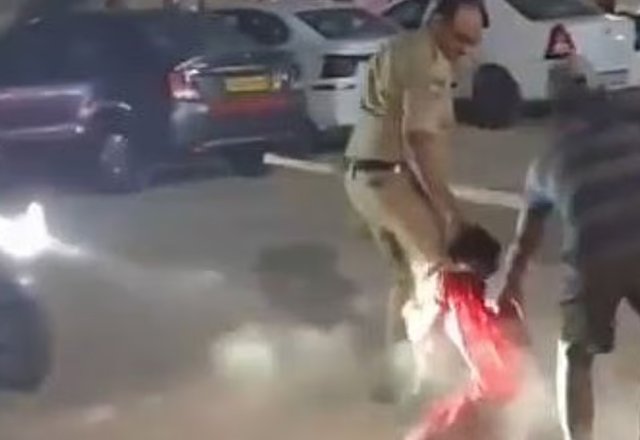
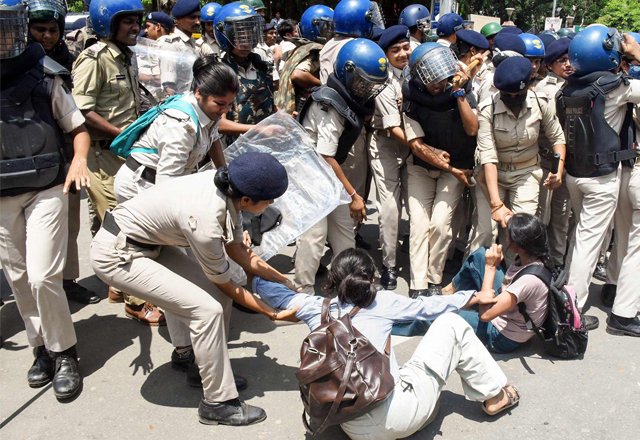
The bench noted that it was examining allegations of police violence—including instances of serious injury and attacks on women, lawyers, and media personnel—and observed that, prima facie, the allegations made out a case of wrongdoing. The CJI asked, “Why shouldn’t there be an independent inquiry into these allegations?”
He emphasized that a prima facie case for an independent inquiry existed. Solicitor General Tushar Mehta, appearing for the Centre and the Delhi government, stated that the government was prepared to cooperate if the Supreme Court constituted a committee to investigate the incidents of violence. Significantly, the Court indicated it would order the formation of a high-powered committee to investigate incidents of violence in Delhi and other states.
However, the Court also acknowledged the police’s potential argument that unruly elements sometimes infiltrate peaceful protests, leading to violence. Emphasizing that all stakeholders should assist the court, the CJI stated that the proposed all-India protocol for managing protests and crowd control measures would require some modifications, as events are not unfolding in the conventional manner and the issue needs to be resolved.
The bench, led by the CJI, also took note of allegations regarding the use of pellet guns during the protests, which left several students injured—including a boy who reportedly lost his eyesight. The bench acknowledged reports that the forces deployed at the protest sites had allegedly used rubber bullets, electric batons, and nail-studded lathis.
In its order, the bench also addressed allegations that plainclothes police personnel were deployed during the protests. The bench, which also included Justice Joymalya Bagchi and Justice V. Mohana, ordered the immediate release of minors detained by the police in various states.
The Supreme Court directed the Centre and the Delhi Police to place their responses on record and allowed other states where violence occurred to submit their details as well. The bench ordered the preservation of all CCTV footage, drone recordings, wireless communication logs, and other records related to these protests.
The bench stated that digital data of protesters recorded by the police would not be made public, adding, “No personal data or details of the protesters shall be published…”
The Supreme Court will hear the matter further next week.