Uttarakhand’s Madrasa Education Board Act and rules linked to it expired on Wednesday, July 1, paving the way for implementation of the new Uttarakhand Minority Education Act.
Chief Minister Pushkar Singh Dhami today announced the repealing of the old law and the rules for recognition of non-government Arabic-Persian madrasas.
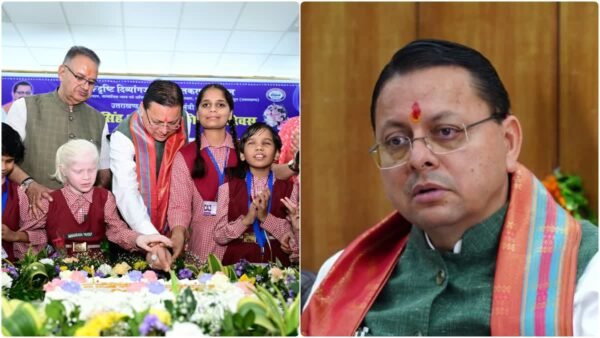
He will also distribute recognition certificates to minority educational institutions starting today. A programme for this purpose has been organised at the ‘Mukhya Seva Sadan’ located at the chief minister’s residence.
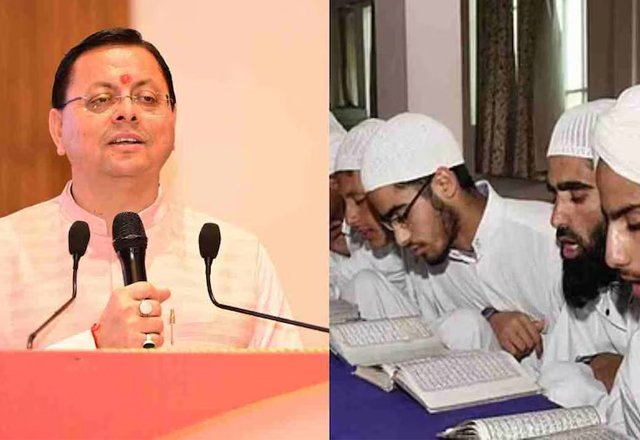
With the implementation of the Minority Education Act in the state, Madrasas will now operate under a dual-shift education system.
In the morning shift, the madrasas mandatorily teach subjects such as Hindi, English, mathematics, science, and computer studies. Subsequently, the evening shift will cover religious education alongside lessons on the Constitution, human rights, national unity, and moral values.
Under the new framework of the Minority Education Act, students from Madrasas that meet the Education Department’s standards will also receive certificates from the State Education Board.
Per official data, nearly 452 madrasas are currently operating in the state; of these, around 400 run classes from grades 1 to 8, while 55 operate classes from grades 9 to 12.
Under the guidance of Prime Minister Narendra Modi, the Uttarakhand government is working towards an education system in the state that is modern, transparent, high-quality, and accountable, while also being rooted in values of nation-building. This new system will ensure a uniform and transparent recognition process for all minority educational institutions,” Dhami said.
The Chief Minister said that the government’s resolve is to empower youth through modern education, science, technology, skills, and Indian values, enabling them to play a pivotal role in building a developed Uttarakhand and a developed India. “We are continuously moving forward with this very objective,” he added.