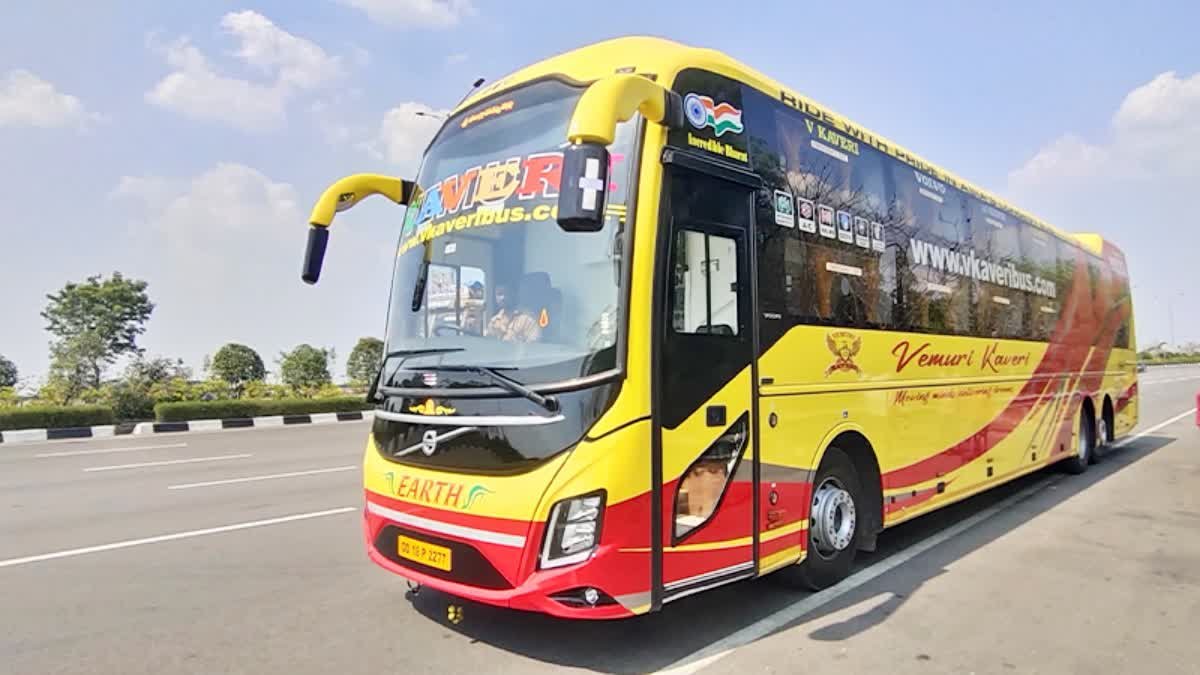
The transport department is preparing for key changes in the tax policy of contract carriage buses in the state of Telangana. The three types of tax policies currently in force – one district, two district limits and the state level – are being studied to abolish them and impose a single quarterly tax on seats in all buses. The state is taking steps towards bringing a single tax policy.
There are 6,641 private buses plying under contract carriage services in the state. This includes those run by operators for general passengers as well as those run by various private companies for their employees. With the current policy, a minimum of Rs. 1,120 to a maximum of Rs. 3,285 per seat is being charged, resulting in a revenue of Rs. 117.83 crore every three months to the state exchequer. Under the new policy, transport department officials expect to charge Rs. 1,500 or Rs. 1,800 per seat.
If the tax on the price of a bus seat is fixed at Rs. 1,500, it will generate an additional revenue of Rs. 142.23 crore, which is about Rs. 100 crore per year. If it is fixed at Rs. 1,800, it is estimated that an additional revenue of Rs. 209 crore per year will be generated with an income of Rs. 169.71 crore. This burden will inevitably fall on the passengers or on the owners who run the buses for the employees. Currently, buses plying across the state are being charged Rs. 3,285 per seat. However, these will get a huge reduction in the tax burden and will get relief. However, their number is only about 108.
There are 5,100 bus services operating within a single district. These have a tax of Rs. 1,120 per quarter. This means that the same tax will have to be paid whether they operate within a district or across the state. This could turn the new policy into a stumbling block for owners of buses operating short distances. Transport department sources have clarified that so far, only a study is being conducted and no final decision has been taken on this new policy. Officials say that if a decision is made, they will definitely receive feedback from bus owners. They say that the new policy also includes a state permit as well as a joint district permit.
Maxi cabs and vans with 8 to 17 seats must pay tax every three months. In Maharashtra and Karnataka, it is enough to pay life tax at once. That flexibility is there. Due to this, the transport department officials have identified that the number of these vehicles is high there. In this context, it is reliable information that a decision has been taken in principle to give two options to the owners of Telangana maxi cabs and vans: vehicle tax quarterly or life tax.