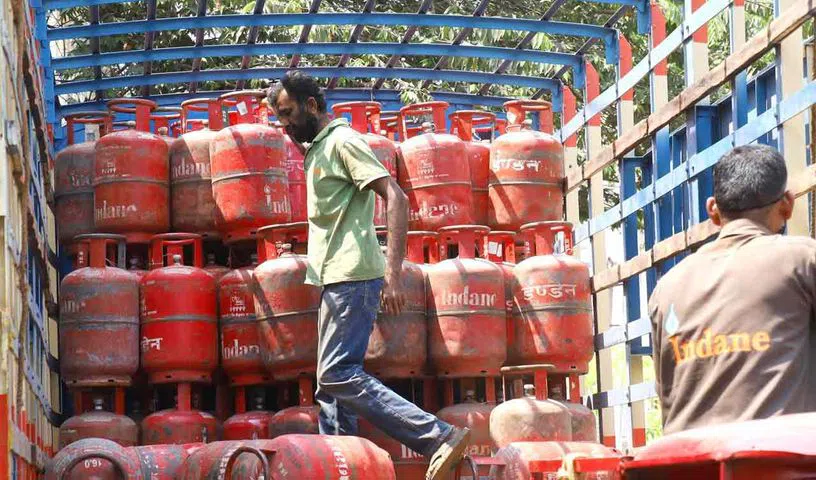
Delhi: The new prices for LPG gas cylinders have been released. For the past few days, there had been growing concern among the public regarding whether the escalating tensions in Iran and the blockade of the Strait of Hormuz would impact gas prices. Now that the new prices have been announced, it has become clear that while there has been a significant hike in the cost of commercial gas cylinders, the prices for domestic cylinders remain unchanged.
Effective May 1st, the price of a 19-kilogram commercial LPG cylinder has seen a direct increase of ₹993. Following this hike, the price of a single commercial cylinder in Delhi has risen to ₹3,071.50. In Mumbai, the price has reached approximately ₹3,024, and in Kolkata, it stands at around ₹3,201.50. This increase is considered substantial and is expected to have a direct impact on hotels, restaurants, and other businesses that utilize these cylinders.
This marks the third instance this year that the prices of commercial gas cylinders have been raised. The first hike—an increase of ₹144—occurred on March 7th. This was followed by a ₹200 increase on April 1st, and now, on May 1st, a massive hike of ₹993 has been implemented in a single go. These consecutive price hikes are placing increasing pressure on business owners. On the other hand, a source of relief is the fact that the price of the 14.2-kilogram domestic gas cylinder remains unchanged this time around. Its price remains steady at ₹913 in Delhi, ₹912.50 in Mumbai, ₹928.50 in Chennai, and ₹939 in Kolkata. This year, the price of domestic cylinders was hiked only once—in March—by ₹60. The government has kept the prices stable on this occasion to ensure that the burden on the common people does not increase.
The primary reason behind this hike in gas prices is the escalating tension in the Middle East. The supply of oil and gas has been impacted due to the conflict between Iran and the United States, as well as the blockade of the Strait of Hormuz. The Strait of Hormuz is a critically important global maritime route through which vast quantities of oil and gas are transported. When disruptions occur in this region, supplies dwindle, and prices inevitably rise.
India imports a significant portion of its energy requirements from abroad. Approximately 60 percent of the country’s LPG is imported, with 85 to 90 percent of this volume originating from West Asian nations such as Saudi Arabia and the UAE. Consequently, any instability or issue arising in that region has a direct and immediate impact on India. Although India has attempted to mitigate the situation to some extent—notably by sourcing oil from countries like Russia—the underlying pressure persists. The repercussions of this price surge are now gradually becoming visible in the market. The rising cost of commercial gas will increase operating expenses for hotels, *dhabas*, and restaurants, which, in turn, could lead to an escalation in the prices of food and beverages. Conversely, the fact that domestic gas prices have remained unchanged has certainly provided a measure of relief to the general public for the time being.