Amidst a war-like situation involving Iran—where an LPG crisis is already being witnessed—oil marketing companies, on the other hand, hiked the prices of premium petrol on Friday. Meanwhile, the price of wholesale diesel sold to industrial users has gone up by approximately ₹22 per liter.
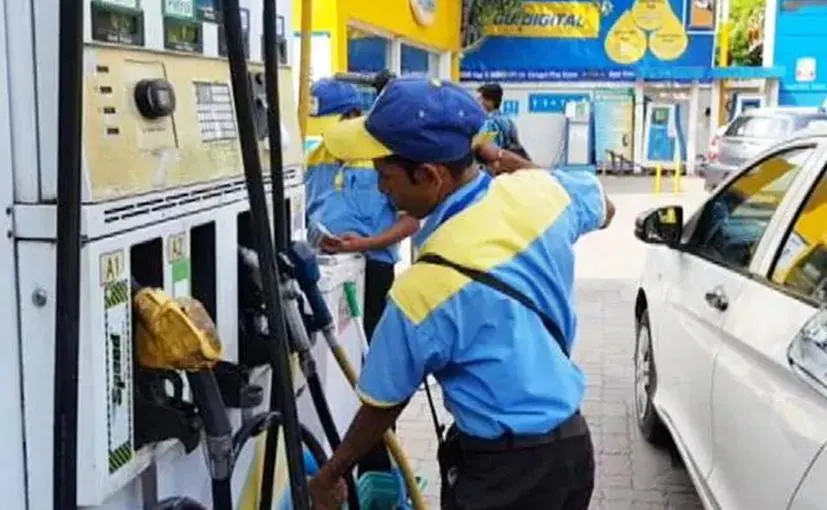
Effective March 20, 2026, oil marketing companies (OMCs) took a significant step by increasing the prices of premium petrol. According to reports, the price of this fuel has been raised by ₹2 to ₹2.35 per liter. The prices of BPCL’s ‘Speed,’ HPCL’s ‘Power,’ and IOCL’s ‘XP95’ have risen by ₹2.09 to ₹2.35 per liter.
Following a hike of over ₹2 in premium petrol prices, the cost in Lucknow—the capital of Uttar Pradesh—has now reached ₹103.92 per liter. Meanwhile, in Pune, the price of premium petrol has risen to ₹113.77. On the global stage, crude oil prices have surged past the $119-per-barrel mark due to the ongoing conflict in Iran.
According to reports, the impact of this price hike has fallen primarily on these high-grade, branded fuels. Prominent names such as Hindustan Petroleum Corporation Limited (HPCL)’s ‘Power’ petrol and Indian Oil Corporation Limited (IOCL)’s ‘XP95’ are included in this category. Following this hike, monthly fuel expenses are bound to increase slightly.
It is worth noting that this price hike has been limited exclusively to high-quality premium petrol. If you fill your vehicle with standard (regular) petrol for your daily commute, there is no need for you to worry. The OMCs have clarified that there has been no change in the prices of regular petrol.
This type of petrol is characterized by a higher octane number. Typically, this number stands at 95 or above, whereas regular petrol has an octane number of 91. Premium petrol provides smoother operation and enhanced performance for vehicle engines. It is available at almost every petrol pump in major cities and is used in sports bikes, cars, vehicles equipped with turbo engines, and high-performance automobiles.